
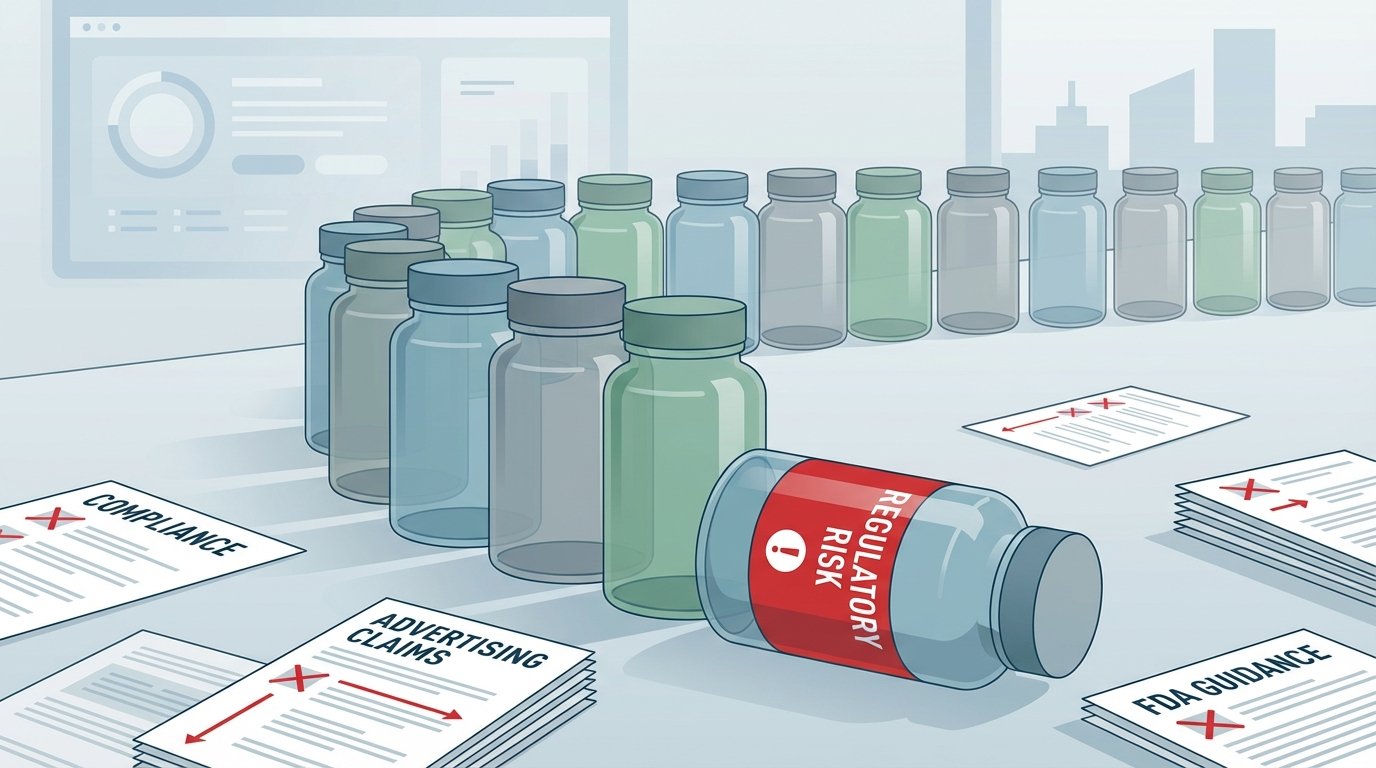
The most expensive supplement marketing mistake is not a weak headline. It is building a campaign around a claim the brand cannot defend, a channel that cannot carry nuance, or a purchase path that does not answer safety questions.
The research baseline for this article combines US search intent from Ahrefs with official FDA and FTC guidance. The practical goal is not louder healthcare copy. It is a campaign architecture that can carry evidence, risk language, and commercial momentum at the same time.
Search Intent And Positioning
Primary keyword focus: supplement marketing. US search demand around “dietary supplement” is broad and competitive. The better content angle is mistake prevention: claims, testimonials, evidence, retail conversion, and retention.
Regulatory Guardrails To Build Around
The main compliance trap is the net impression of the whole ad. The FTC Health Products Compliance Guidance makes clear that advertisers need a reasonable basis for health claims before dissemination, while FDA supplement rules limit disease-treatment positioning.
This article is marketing strategy content, not legal, regulatory, or medical advice. Final claims should be reviewed by the brand owner, legal counsel, and medical-regulatory reviewers.
A Practical Campaign Framework
| Decision | What to define | Why it matters |
|---|---|---|
| Claim mistake | Benefit copy before evidence review | Creates rework and legal risk |
| Channel mistake | Short ads carrying complex health claims | Compresses caveats and safety context |
| Trust mistake | Testimonials without disclosure or proof | Creates implied claims the brand may not support |
The practical rule is simple: do not let the media plan decide the claim. The claim decides how much context, review, and destination support the media plan needs.
Channel Decisions
| Channel | Best role | Main risk |
|---|---|---|
| Paid social | Awareness and education | Fast testing of unreviewed claims |
| Amazon/retail | Conversion proof and comparison | Review stars imply unsupported outcomes |
| SEO | Ingredient and use-case education | Medical language drifts into disease claims |
| Email/SMS | Retention and replenishment | Overpromising results to buyers |
Every channel should have a job it can realistically perform. If a format cannot show the qualification, limitation, or risk context that makes the claim accurate, the format should route to a deeper page instead of carrying the full promise alone.
Teapot POV
Build the supplement growth system backward from the claim file. When evidence, label language, creative examples, creator rules, and landing-page modules are aligned, performance marketing becomes faster because review cycles stop restarting.
For pharma and healthcare teams, this is where strategy becomes implementation: one evidence file, one claim map, one route from content to conversion, and one measurement model that separates attention from qualified action.
FAQ
What is the biggest supplement marketing mistake?
Launching claims before the evidence and review file exists. Media optimization cannot fix an indefensible claim.
Are testimonials safe if they are real?
Not automatically. Real testimonials can still imply typicality, efficacy, speed, or medical outcomes that need substantiation and disclosure.
What should a supplement landing page include?
Clear product role, ingredient explanation, claim support, limitations, use instructions, safety notes, reviews, and a realistic next action.
Practical Next Step
Before creative production starts, write a one-page claim map: audience, allowed claim, proof source, channel, review owner, and destination page. If the claim cannot fit that memo cleanly, the campaign is not ready for media spend. For a deeper service view, start with Teapot Pharma or talk to us.